Monday, February 17, 2014

Watch Out for Added Sugars, And a Recipe for No-Sugar Added Granola Bars

A recent study published in the journal JAMA Internal Medicine found that eating too much added sugar does not only increase our waist size—it also increases our risk for heart disease.  And most American adults—71.4 percent—eat more added sugar than recommended by health experts.  Other recent studies have found eating too much added sugar directly increases the risk for developing high blood pressure, high cholesterol, cardiovascular disease, diabetes, liver cirrhosis and dementia.

This does not mean sugar is inherently bad, or that you can’t ever eat sugar again.  It’s just important to be aware of the amount of added sugar you’re eating.  And, you may not even realize it!

Sugars in your diet can be naturally occurring or added. 

·       Naturally occurring sugars are found in foods such as fruit and fruit juice (fructose) and milk products (lactose).  Vegetables also have some naturally occurring sugars.  Naturally occurring sugars are good sources of carbohydrate, for energy.  Also, when you eat naturally occurring sugars from whole foods, you’re also consuming the inherently good properties from those foods, such as fiber and antioxidants from fruits or protein from dairy products.  

·       Added sugars are sugars and syrups put in foods during preparation or processing, or added at the table (like when you add sugar to your cereal or oatmeal).  The major sources of added sugars are regular soft drinks, sugars (including brown sugar, honey, molasses, maple syrup), candy, cakes, cookies, pies and fruit drinks (like fruit punch), dairy desserts and milk products (ice cream, sweetened yogurt and sweetened milk), and other sugar-sweetened grains (cinnamon toast and waffles).  Added sugars have no nutritional value, other than a source of energy. 

For example, just one 12-ounce can of regular soda contains eight teaspoons of sugar, or 130 calories and zero nutrition.

Most people consume more sugar than they realize.  To figure out if a food contains added sugars (and how much it contains, you have to look at the nutrition label and the ingredient list.  After you’ve determined whether the food has added or naturally occurring sugars, then you can make an informed decision about whether it’s a good choice. 

1.     Look at the nutrition label


Under the total carbohydrates, you’ll find a line for sugars, and the number of grams of sugar per serving in this item.  This number is the total number of sugars in this food—both naturally occurring sugars AND added sugars.
 
2.      Look at the ingredient list
To determine whether the food has naturally occurring sugars, added sugars, or both, read the ingredient list.  Sugar has many other names. Besides those ending in “ose,” such as maltose or sucrose or fructose, other names for sugar include high fructose corn syrup, molasses, cane sugar, corn sweetener, raw sugar, syrup, honey, maple syrup or fruit juice concentrates.  If the sugar ingredient is in the first three or four ingredients on the label, it means it’s a big proportion of that product.
 
How Much Added Sugar is Too Much?

The American Heart Association (AHA) recommends the following amounts as the maximum amount of added sugars to eat in a day.  This does not count fruit, dried fruit, fruit juice or dairy products, all of which have naturally occurring sugars (but check those labels for added sugars!).
·       Women:  6 teaspoons (24 grams) daily (100 calories)
·       Men:  9 teaspoons (36 grams) daily (150 calories)
·       Children:  3 teaspoons (12 grams) daily (48 calories)

Tips for Reducing Added Sugar

·       Read labels!  Choose products with the least amount of added sugars.
·       Cut back on the amount of sugar added to things you eat or drink regularly like cereal, pancakes, coffee or tea.  Try cutting the usual amount of sugar you add by half.
·       Buy fresh fruits or fruits canned in water or natural juice. Avoid fruit canned in syrup, especially heavy syrup.
·       Instead of adding sugar to cereal or oatmeal, add fresh fruit or dried fruit.
·       When baking cookies, brownies or cakes, cut the sugar called for in your recipe by one-third to one-half. Often, you won’t notice the difference. 


Here’s a recipe for no sugar added granola bars.  They get their sweetness from dates, a natural source of sugar.


No-Sugar Added Granola Bars

¾ cup water
¾ cup dates
½ cup almond butter
¼ cup coconut oil, melted
2 cups rolled oats
1/2 teaspoon salt
1 ½ cups sliced almonds
1 cup unsweetened coconut flakes
1 cup dried apricots, chopped

Preheat the oven to 350 degrees.  Line a 12 x 9 pan in the long direction with parchment paper, allowing it to go up the opposite sides.  Lightly grease the parchment paper with coconut oil (or butter)

Add the water and dates to a blender and process until very smooth.  Pour the date paste into a bowl, and then add the almond butter and coconut oil.  Stir to combine.

Stir together all the dry ingredients, including the oats, salt, almonds, coconut flakes and apricots.  Pour the wet ingredients over the dry ingredients until the mixture is evenly combined.  Spread in the prepared pan, pressing them in firmly to ensure they are molded to the shape of the pan.

Bake the bars for 30 to 40 minutes, until they’re brown around the edges and on the top.  Cool the bars in their pan completely on a cooling rack. Once they have cooled, move the pan to the fridge to further set them.  Once they are completely chilled, remove the bars from the pan using the parchment paper, and cut them inot squares. 

To store, wrap the bars individually in plastic and store them in the refrigerator. They also freeze well.  If they crumble (which they might!) just use them like you would granola.  They are still delicious.


Wednesday, February 12, 2014

Apple Hearts for (food) Lovers


It’s fairly safe to say that Lisa and I seem to have a love affair with red foods. We’ve professed our love for tomatoes, strawberries, raspberries, beets, pomegranates, tart cherries and cranberries. Yet, another very important food (that I actually eat almost every single day) falls into this color category: apples.  In fact, we’re partnering with the US Apple Association tomorrow at 4pm PST for a fun Twitter chat where we’ll be dishing out some health facts and tips about the benefits of eating apples.


And there are a lot of benefits in eating an apple a day.


Every time you bite into an apple, you’re giving your body a healthy dose of nutrition. One medium apple is only 95 calories but provides 17 percent of your daily recommended intake for dietary fiber and 14 percent of your recommended intake for vitamin C. Not only that, there are tons of studies backing up the health benefits of apples including cancer prevention, improved heart health, and even the ability to help keep your weight at a happy place. But, since it is National Heart Month, we do feel our tickers deserve a little bit of extra attention.


Lisa touched on impressive study earlier this week, but there is even more research backing up the heart protective qualities of apples. Researchers at the University of California-Davis have reported that daily consumption of apples and apple juice may help reduce the damage caused by the “bad” type of cholesterol and protect against heart disease. And an additional study in the American Journal of Clinical Nutrition in 2005 reported that that for every 10 grams of fiber consumed per day the risk of developing heart disease may decrease 14 percent, and the risk of dying from heart disease may decrease 27 percent.


This is some very good news for apples, and the other red foods we love, considering they’re such wonderful sources of fiber.  And don’t even get us started on our love of fiber. 
So today, in recognition of Valentine’s Day -- which is just around the corner! -- celebrate by showing yourself and your heart some love with these cute Apple Hearts.


This adorable snack is the perfect thing to add to your child’s, friend’s, spouse’s, or your own (I’m doing this!) lunchbox this week.

The best part? It’s so easy to do. 

As our favorite culinary guru, Julia Child once said:
“You don't have to cook fancy or complicated masterpieces – just good food from fresh ingredients.”


So choose a type of apple you really love. Because we know an apple isn’t just an apple -- Gala, Pink Lady, Granny Smith, Fuji, Honeycrisp, Braeburn, Golden Delicious, Macintosh – the options are far from few.

Find some a delicious aged cheddar cheese.
Or, some chunky almond or peanut butter from your local natural grocery store.

And assemble your apple sandwich. In fact, this is so cute, we really think it may become a weekly tradition.


Enjoy, and be happy that you’re showing your heart some love.


Monday, February 10, 2014

Apple, Fennel, Kale and Roasted Tomato Sprouted Whole Wheat Linguine—For Heart Health

I know what you’re thinking.  Apple? In pasta?   

Hold on just a minute, while I explain.

Think about chicken apple sausage, and the delicious way the savory and sweet marry together so beautifully.  Well, that’s what this dish does, without the meat.  The apple and fennel add sweetness, while the roasted grape tomatoes add a smoky, savory base.  And the kale?  Well, we do love kale.


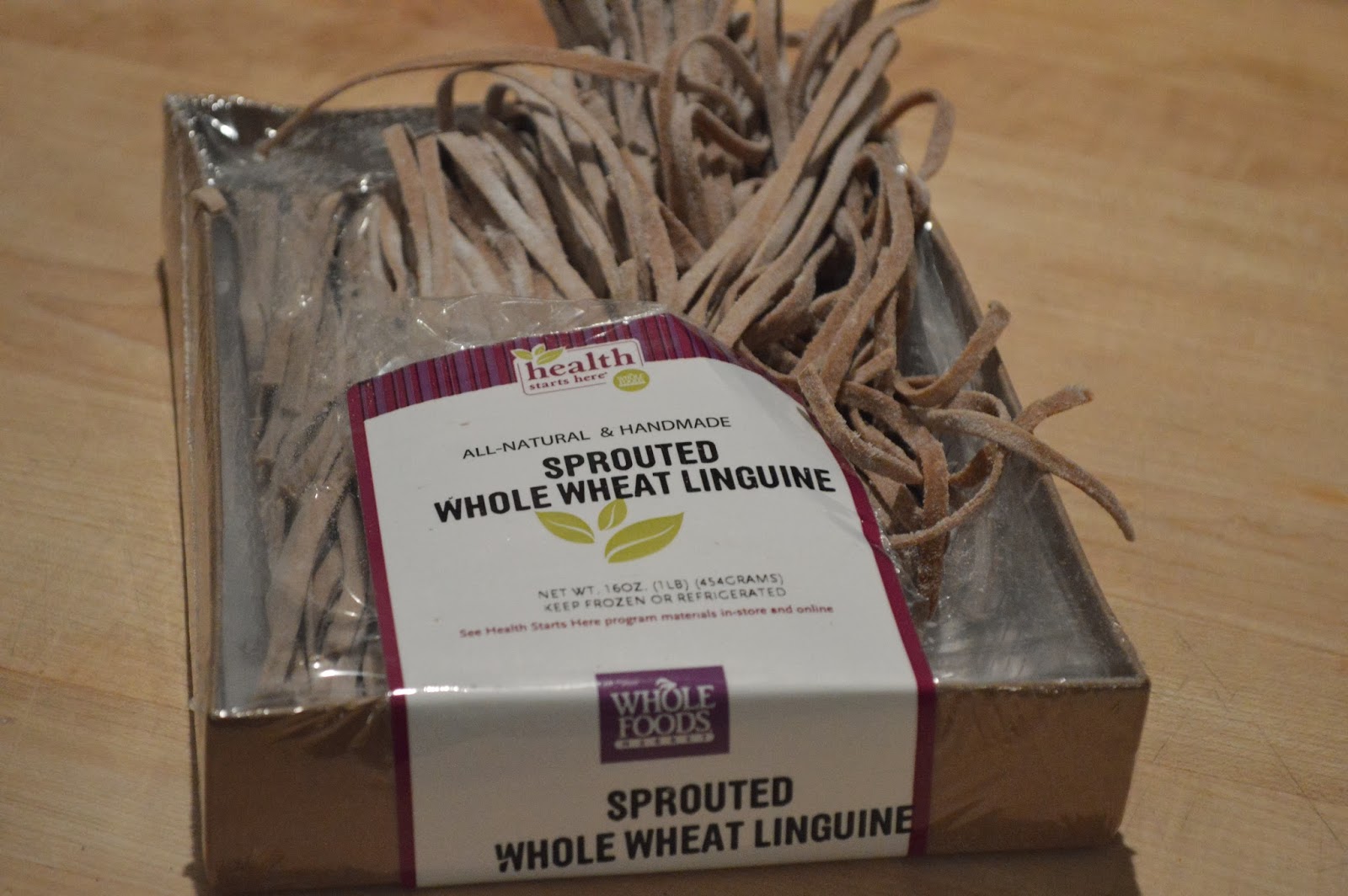
I used a sprouted whole wheat pasta I found at the market, but you could substitute any whole wheat pasta.  It would also be delicious and sausage-like with a little fried sage garnish.  I didn’t have any sage when I made this dish, but that sounds good.


This dish is perfect for your meatless Monday menu, and will satisfy the meatless-skeptics in your household (if you have any).

Even better?  It’s ready in less than 30 minutes, so it’s perfect for a weeknight meal.

And if you need one more reason to make this pasta tonight, do it for your heart.  February is American Heart Month , and that’s as good a reason as any to make sure you’re doing your heart good—focusing on eating lots of vegetables and fruits, getting enough fiber, and eating heart-healthy fats.    

This recipe fits the bill.  And how about this?  New research shows an apple a day truly does keep the doctor away.  In a recent study by Ohio State University of middle-aged adults, eating one apple a day for four weeks lowered levels of oxidized LDL (bad cholesterol) in the blood by 40 percent.  Higher levels of oxidized LDL put you at higher risk for heart disease, so start eating those apples.

Here’s to a healthy heart—and a delicious dinner.


Apple, Fennel, Kale and Roasted Tomato Sprouted Whole Wheat Pasta

Serves 4

1 pint grape or cherry tomatoes
1 tablespoon extra virgin olive oil
1 small fennel bulb, thinly sliced
1 apple, shredded
Pinch of red pepper flakes, to taste
Pinch of sea salt
1 small bunch kale, stemmed and thinly sliced
Splash of white wine, about 2 tablespoons
2 tablespoons freshly grated parmesan cheese
8 ounces sprouted whole wheat linguine (or any whole wheat pasta), cooked according to package directions, in well-salted water
¼ cup of reserved pasta water

Preheat the oven to 425 degrees.

Place the grape tomatoes on a sheet pan and roast, about 20 minutes, or until starting to brown and pop open. 

Heat a large skillet over medium heat.  Add olive oil, fennel, apple, red pepper flakes and salt.  Sauté until the fennel and apple wilt, about 5 minutes.  Add the kale and continue to cook until kale is tender, about 10 minutes. 

Add a splash of white wine to the pan, cooking until the wine is reduced.  Add the tomatoes (and any juices from the pan) to the skillet and stir.  Sprinkle the parmesan cheese over the vegetables and then add the pasta to the pan, along with about ¼ cup of reserved pasta water.  Stir and cook together for about another minute, until all of the pasta is incorporated with the vegetables.

You can sprinkle a little extra parmesan cheese on the top, if you like.


Enjoy, preferably with someone you love.

Thursday, February 6, 2014

Pistachio Pairing #2 (with raspberries, Greek yogurt & cinnamon)


“We received free pistachio samples from the Pistachio Health Institute mentioned in this post. By posting this pairing we are entering a contest sponsored by Pistachio Health Institute and are eligible to win prizes associated with the contest. We were not compensated for our time.”


In our last post, we mentioned that pistachios make our job easy. And it’s true – they really do. They’re packed with nutrition and health promoting properties, and are relatively low in calories compared to other nuts. In-shell pistachios, in particular, have their own health perks. In a study published in 2011, people who consumed in-shell pistachios ate 41 percent fewer calories than those who consumed pistachios without shells. This suggests that empty shells may be a helpful visual cue as to how much has been eaten – thereby potentially encouraging mindful eating practices. And the best part? They taste amazing. So they’re an easy food to incorporate into your eating pattern.


But pistachios are not alone. There are a few other foods that we put in the “they make our job look good” category.


Enter: raspberries. Who doesn’t love these little gems? Perfectly sweet, while also being packed with nutrients and fiber (8 grams per 1 cup serving!), raspberries may just be pistachio’s best friend.


Greek yogurt is another easy food to promote. It’s higher in protein than regular yogurt, yet has this smooth consistency that is simply irresistible.


When you add these all together for our Recipe ReDux pairing, the result is nothing short of wonderful:


In-shell pistachios + red raspberries + non-fat plain Greek yogurt + a sprinkle of cinnamon


Cinnamon really is this icing on the cake in this combination. Cinnamon may have more to offer than its trademark sweet aroma and flavor. While scientists have known that cinnamon provides antioxidant, anti-inflammatory, and antimicrobial effects, research now adds other potential benefits for cinnamon, including a blood-glucose lowering effect.

 Now, this is a combination worth celebrating. It's packed with fiber, protein, and flavor; it's guaranteed to hold you over until your next meal.

 We hope you enjoy our pairing idea! (preferably with those you love).


Wednesday, February 5, 2014

Pairing Pistachios (with tart cherries, olive oil popcorn & red wine)

“We received free pistachio samples from the Pistachio Health Institute mentioned in this post. By posting this pairing we are entering a contest sponsored by Pistachio Health Institute and are eligible to win prizes associated with the contest. We were not compensated for our time.”


There are some foods that make our jobs so easy. As registered dietitians, we’re all about encouraging lifestyle habits that promote a healthy heart, brain, and body. But, at the end of the day, if food doesn’t taste good, people (including ourselves!) aren’t going to eat it.


That’s why we love in-shell pistachios.


In-shell pistachios are one of those foods that are hard not to love. I remember when I was in elementary school and my mom would pack in-shell pistachios in my lunchbox, I felt like I hit the goldmine. I would sit outside with my friends at lunchtime and we would carefully pull off all of those delicate shells and savor each delicious bite.


 Today, I still view pistachios as such a treat – but, it turns out they’re something I can feel so good about snacking on.  A one-ounce serving of pistachios equals approximately 49 nuts which is more nuts per serving than any other snack nuts – that’s great news for the pistachio-lovers around the world!  Recent research from Harvard University and published in New England Journal of Medicine also suggests that the benefits of snacking on nuts go up as the number of servings goes up, too. Bottom line: more nuts, more benefits! This is why Lisa and I like to recommend a daily handful of nuts, such as pistachios, as part of a healthy diet.


 To make our pistachio-eating experience even more delicious and good for our hearts, brains, and bodies, we incorporate the principles of the Mediterranean diet. We add some whole grains, dried fruit, and of course, red wine.


This is our pairing:


 in-shell pistachios  + unsweetened dried cherries + air-popped olive oil popcorn 
+ a glass of red wine (we chose a California Cabernet)


 This combination makes for such an enjoyable snack – and when you keep the pistachios in their shell, it helps to slow you down and be more mindful of what and how much you’re eating.


Our recipe for Olive Oil Popcorn

Ingredients:

2 – 3 tablespoons extra virgin olive oil
½ cup organic popcorn
½ teaspoon fine sea salt

Instructions:

  1. Heat a heavy-duty pot or Dutch oven over medium heat.  Place the oil, popcorn and salt in the pot.
  2.  When the popcorn begins to pot, cover tightly with a lid and cook, shaking the pot every few seconds, until the kernels stop popping.  Remove the lid. 
  3. Taste and add more salt, if necessary.  Let sit for a few minutes, until cool. 


Enjoy, preferably with those you love.